REVISTA INCLUSIONES – REVISTA DE HUMANIDADES Y CIENCIAS SOCIALES

ISSN 0719-4706
Volumen 13 Número 2
Abril - Junio 2026
e3718
https://doi.org/10.58210/rie3718
Educational intervention model for strengthening environmental education through IoT - Volumen 13 Número 2 - Página —-
| |
ISSN 0719-4706 | |
Educational intervention model for strengthening environmental education through IoT
/
Modelo de intervención educativa para el fortalecimiento de la educación ambiental mediante IoT
Emilio Zhuma Mera
Universidad Técnica Estatal de Quevedo, Ecuador
ezhuma@uteq.edu.ec
https://orcid.org/0000-0002-3086-1413
Geovanny Brito Casanova
Universidad Técnica Estatal de Quevedo, Ecuador
gbritoc@uteq.edu.ec
https://orcid.org/0000-0002-7715-7706
Kevin Loza Yánez
Universidad Técnica Estatal de Quevedo, Ecuador
klozay@uteq.edu.ec
https://orcid.org/0009-0003-3867-1651
Karina Ordoñez Guerrero
Universidad Técnica Estatal de Quevedo, Ecuador
karina.ordonez2016@uteq.edu.ec
https://orcid.org/0009-0009-2507-0519
Fecha de Recepción: 26 de diciembre de 2025
Fecha de Aceptación: 2 de marzo de 2026
Fecha de Publicación: 8 de mayo de 2026
Financiamiento:
El autor declara que este estudio no recibió financiación externa.
Conflictos de interés:
El autor también declara no tener ningún conflicto de intereses.
Correspondencia:
Nombres y Apellidos: Emilio Zhuma Mera
Correo electrónico: ezhuma@uteq.edu.ec
Dirección postal: Av. Carlos J. Arosemena 38, Quevedo, Ecuador
Los autores retienen los derechos de autor de este artículo. Revista Inclusiones publica esta obra bajo una licencia Creative Commons Atribución 4.0 Internacional (CC BY 4.0), que permite su uso, distribución y reproducción en cualquier medio, siempre que se cite apropiadamente a los autores originales.
https://creativecommons.org/licenses/by/4.0/
Abstract: Environmental education requires experiences that link learning and active participation in everyday spaces. This study proposes an educational intervention model supported by the Internet of Things, where playful interaction facilitates reflection on responsible practices. The proposal was developed based on a literature review, dialogue with specialists, and the integration of environmental sensors into an interactive touchscreen system. The experience was applied to 32 people, assessing interaction using the System Usability Scale. The results show a favorable perception, reflected in an average score of 75.3, along with observations aimed at visual and sensory adjustments. The experience demonstrates that the model allows environmental education to be brought into educational and community spaces, maintaining pedagogical consistency and offering possibilities for application in environments with similar conditions.
Keywords: experiential learning; educational technology; playful interaction; usability evaluation; smart devices.
Resumen: La educación ambiental requiere experiencias que vinculen aprendizaje y participación activa en espacios cotidianos. En este estudio se plantea un modelo de intervención educativa apoyado en Internet de las Cosas, donde la interacción lúdica facilita la reflexión sobre prácticas responsables. La propuesta se construyó a partir de revisión bibliográfica, diálogo con especialistas y la integración de sensores ambientales en un sistema interactivo con pantalla táctil. La experiencia se aplicó con 32 personas, valorando la interacción mediante la escala System Usability Scale. Los resultados evidencian una percepción favorable, reflejada en un puntaje promedio de 75.3, junto con observaciones orientadas a ajustes visuales y sensoriales. La experiencia demuestra que el modelo permite llevar la educación ambiental a espacios educativos y comunitarios, manteniendo coherencia pedagógica y ofreciendo posibilidades de aplicación en entornos con condiciones similares.
Palabras clave: aprendizaje experiencial; tecnología educativa; interacción lúdica; evaluación de usabilidad; dispositivos inteligentes.
INTRODUCTION
The relationship between human activities and the natural environment poses challenges that affect resource availability, ecosystem stability, and long-term living conditions. International organizations warn that rapid climate change, species decline, and increased pollution require educational initiatives focused on environmental responsibility from an early age[1]. In this context, environmental education is presented as a formative approach aimed at promoting responsible attitudes, sustainable habits, and a more conscious relationship with the environment[2],[3].
Formal and community educational spaces have played an important role in environmental education; however, traditional teaching strategies often have limitations in capturing the interest of students immersed in digital environments. Several studies indicate that incorporating technological resources into pedagogical processes promotes more participatory experiences by stimulating interaction, curiosity, and motivation[4],[5],[6]. The integration of environmental education and educational technology is proposed as an alternative with potential in school and social settings[7],[8].
Within this landscape, the Internet of Things (IoT) stands out for its ability to link physical objects with digital systems capable of collecting and processing information in real time[9],[10]. This technology has shown applications in productive, health, and agricultural sectors, and has gradually begun to be incorporated into educational proposals geared toward active learning[11]. Experiences developed in European contexts show that educational environments supported by IoT and game dynamics promote awareness of energy consumption and care for the environment, demonstrating the influence of direct interaction on the formation of attitudes[12].
Complementarily, gamification applied to environmental training processes has shown contributions to the appropriation of content and the internalization of values associated with respect for nature. By incorporating playful dynamics, visual feedback, and active participation, these strategies facilitate learning and promote reflection based on experience[13]. The combination of IoT and playful activities opens up possibilities for developing educational proposals that are closer to the interests of children, young people, and adults.
In Latin America, the application of this type of initiative is of particular interest. The region has great natural diversity, while facing challenges related to urban growth, extractive practices, and limitations in environmental management processes[14]. These conditions demand educational proposals supported by accessible technologies that can be applied in educational institutions and community spaces, promoting meaningful learning and the adoption of responsible behaviors.
In this sense, IoT-based recreational devices represent an educational alternative that integrates physical and digital interaction. Through the use of sensors, actuators, screens, and audiovisual stimuli, these systems enable the development of educational activities related to recycling, responsible water use, and biodiversity conservation[15],[16]. Their presence in public and educational spaces encourages spontaneous participation, shared learning, and collective dialogue on environmental issues.
Based on these considerations, this study proposes an educational intervention model supported by IoT technologies and playful dynamics, aimed at strengthening environmental education. The interactive device developed is used as a means of applying the model, allowing its technical and pedagogical components to be described, environmental sensors to be integrated, and the usability of the system to be evaluated using the System Usability Scale (SUS), considering a score of 68 or higher as a reference. This approach seeks to provide an educational experience that can be adapted to educational and community spaces, where technology acts as a support for learning and environmental awareness.
RELATED WORK
Environmental education and the use of technologies applied to learning have been addressed from multiple perspectives in scientific literature, giving rise to proposals that combine training, interaction, and responsible use of the environment. Various studies analyze how exposure to air, water, and soil pollutants affects ecosystems and human well-being, motivating the development of educational initiatives aimed at reflection and informed decision-making[17],[18],[19]. In the field of education, concepts such as the ecological footprint are used as a starting point to promote responsible behavior and strengthen environmental awareness. In this regard, the role of institutional campaigns and communication strategies linked to environmental care is also examined, which serve as support for educational and social actions[20],[21].
The Internet of Things is presented in the literature as a technological resource capable of coordinating measurement, visualization, and learning processes. Various studies describe its application in initiatives aimed at monitoring environmental variables and supporting data-based educational processes[22]. Other research analyzes its incorporation into production and organizational processes with sustainability criteria, addressing technical aspects and technology adoption[23]. Studies related to smart campuses and environments show applications focused on resource management, the use of distributed sensors, and the communication of environmental information to educational communities[24],[25]. Aspects related to privacy, information security, and data protection are examined, considered in projects involving interaction with users in educational and open spaces[26],[27]. Contributions on the use of visualization platforms to facilitate the interpretation of environmental indicators by non-specialized audiences are also reported[28],[29].
In the field of technology-supported education, experiences integrating IoT with participatory teaching strategies have been documented. The GAIA project is a benchmark in this field, incorporating sensor nodes in educational buildings and game dynamics aimed at promoting responsible energy use, demonstrating changes in students' attitudes and practices[30]. Other proposals analyze the incorporation of IoT technologies in public spaces for educational purposes, highlighting direct interaction as a means of encouraging citizen participation and shared learning. At the technical level, reviews of sensors applied to sustainable environments describe measurement repertoires useful for both teaching activities and the communication of local environmental information[31]. In natural settings, IoT-supported recreational applications have been explored that facilitate educational experiences linked to responsible practices for visiting and caring for the forest environment[32].
From the perspective of interactive learning, proposals have also been developed that integrate sensors, smart modules, and playful activities to promote user attention and interest. Experiences with smart planters and virtual courses show how reading variables such as soil moisture and CO₂ concentration can be used for educational purposes, supported by game dynamics and visual feedback[33]. Although aimed at different audiences, studies on IoT applied to childcare and human-robot platforms focused on interaction and emotion provide evidence of the ability of tangible devices to sustain user interest and enrich the educational experience[34],[35].
In other words, the studies reviewed agree that the integration of accessible technology with educational proposals based on interaction and play favors educational processes linked to caring for the environment. While some experiences prioritize energy management through IoT[36], others focus on the educational activation of public spaces[37], the measurement of environmental variables in urban settings[38], or recreation with educational value in natural areas[39].
METHODOLOGY
The research was developed based on an educational intervention model supported by Internet of Things technologies, aimed at strengthening training processes related to environmental education through playful interaction experiences. The study was linked to the Telematics Engineering degree program at the Technical State University of Quevedo, where the conceptual, technical, and pedagogical design of the model was structured. The practical application was carried out at Paseo Shopping Quevedo, an everyday environment that allowed for the observation of spontaneous interaction between users and a technology-mediated educational proposal.
The methodological design combined documentary work and practical application, articulating theoretical foundations with an educational experience implemented in an open space. This combination made it possible to structure the model, put it into practice, and analyze its performance from the perspective of interaction, user experience, and participant response.
Methodological design of the intervention model
The educational intervention model was structured around three integrated components: pedagogical, technological, and evaluative. The pedagogical component defined the content, recreational activities, and form of interaction with users; the technological component enabled the proposal to be implemented through IoT; and the evaluative component allowed for analysis of the user experience and collection of technical and educational assessments.
During the documentation phase, academic research, technological projects, and educational experiences related to environmental education, gamification, and IoT were reviewed. This review made it possible to establish criteria for the design of educational activities, the selection of sensors, the type of interaction with the user, and the organization of the information presented in the interface. Based on this analysis, the guidelines for the model were formulated, prioritizing clarity of content, direct interaction, and ease of use.
Application of the educational intervention model
The model was implemented using an interactive IoT-based system, which served as the means of implementing the educational proposal. The system was built using a Raspberry Pi 4 as a local server, a five-inch HDMI touchscreen, and DHT22, BMP280, HC-SR04, and FC-28 environmental sensors. The operating logic was developed in Java using Apache NetBeans, while interaction logs and sensory data were stored in a PostgreSQL database. The educational interface was organized into three main sections:
Participants and procedure
Thirty-two volunteers participated in the selected setting and interacted with the system for approximately five minutes each. After completing the interaction, participants answered the System Usability Scale (SUS) questionnaire to assess perceived ease of use, interaction quality, and overall experience.
Additionally, interviews were conducted with three environmental specialists, identified by codes E1, E2, and E3, to gather suggestions related to educational content, thematic expansion, and possible digital extensions of the model. The identities of the specialists were kept anonymous throughout the process.
Information analysis techniques
The quantitative information was analyzed using descriptive statistics from the SUS questionnaire, considering values of central tendency and dispersion, as well as the representation of frequencies per item. The qualitative information obtained from interviews and field notes was organized by thematic categorization, which allowed for the identification of aspects associated with interaction, content presentation, and educational experience.
This analytical process made it possible to establish relationships between the components of the model and the way in which users experienced the IoT-mediated educational proposal.
Ethical considerations and data protection
All participants gave their informed consent prior to interacting with the system. No personal data was stored in the system database; records were limited to usage information and questionnaire responses. The codes assigned to the interviews were kept separate from the technological system and are not part of the manuscript content.
The description of materials, software, and procedures is presented in sufficient detail to allow the model to be applied in other educational or community settings with similar characteristics, adjusting only logistical aspects such as physical space and participant availability.
RESULTS
Determination of device characteristics
The application of the IoT-supported educational intervention model required identifying pedagogical and technical components that would enable the structuring of a training experience based on direct interaction. To this end, an analysis process was developed that integrated a review of specialized literature and consultations with professionals in the educational, technological, and environmental fields. This combination made it possible to establish criteria related to the user experience, content organization, and operation of the system that supports the model.
A review of previous studies revealed that low-power computing platforms, such as Raspberry Pi and Arduino, are well suited for interactive educational proposals due to their compatibility with sensors and the availability of accessible development environments[40],[41],[42]. Similarly, the research consulted indicates that the incorporation of game dynamics, accompanied by visual and auditory stimuli, encourages active participation in training processes linked to environmental education[43],[44]. Likewise, it was identified that interfaces designed for educational spaces should prioritize visual clarity, direct interaction, and immediate readability, in line with experiences developed in interactive systems for public environments[45],[46].
The interviews conducted with specialists were organized into three areas: technical, pedagogical, and operational. From a technical standpoint, the use of a central unit with local processing capacity and sensors geared toward basic environmental variables was recommended. In the pedagogical sphere, the convenience of incorporating touch screens and game-based activities to encourage interaction with content was highlighted. In terms of implementation, it was suggested that priority be given to durable materials and local data storage to ensure continuity of operation in educational spaces. A summary of these contributions is presented in Table 1.
Table 1.
Results of expert interviews
Dimension | Contributions identified | Integration into the model |
Technical | Use of a processing unit with integrated connectivity and sensors for temperature, humidity, pressure, and proximity. | Supports the capture of environmental information as input for interactive educational activities, allowing the scope of the model to be expanded according to the context of application. |
Pedagogical | Incorporation of touch screens and dynamic games with visual and audio feedback. | Encourages active participation and guided exploration of content, strengthening experiential learning in environmental education. |
Implementation | Local storage of information and selection of resistant materials with low energy consumption. | Contributes to the continuity of the model's use in educational and community spaces, reducing operational interruptions and facilitating its application in different scenarios. |
Source: Created by the authors
Technological system as a means of applying the model
The educational intervention model was implemented through an interactive IoT-based system, used as a means to apply the training proposal. The system integrated a Raspberry Pi 4 Model B as the central processing unit, a five-inch LCD touch screen, environmental sensors (DHT22, BMP280, FC-28, and HC-SR04), and a metal protective structure that facilitated its installation and transport.
In terms of the software environment, PostgreSQL was used for record storage, Apache NetBeans for Java logic development, Postman for communication testing, Visual Paradigm for system modeling, and Fritzing for electronic schematic representation. Table 2 presents the components used within the system that supports the educational model.
Table 2.
Hardware and software selected for the prototype
Category | Selected elements | Function within the model |
Hardware | Raspberry Pi 4 Model B | Processing and control |
5" LCD touchscreen | User interaction | |
Aluminum case | Physical protection and heat dissipation | |
Sensors (DHT22, BMP280, HC-SR04, FC-28) | Measurement of environmental and physical variables | |
UTP Cat 5e cables and connectors | Physical network communication | |
Software | PostgreSQL | Relational database |
Apache NetBeans IDE | Java development | |
Postman | REST API testing | |
Visual Paradigm | UML modeling | |
Fritzing | Circuit schematics | |
Visual Studio Code | Code editor | |
RealVNC Viewer | Remote access to the Raspberry Pi |
Source: Created by the authors
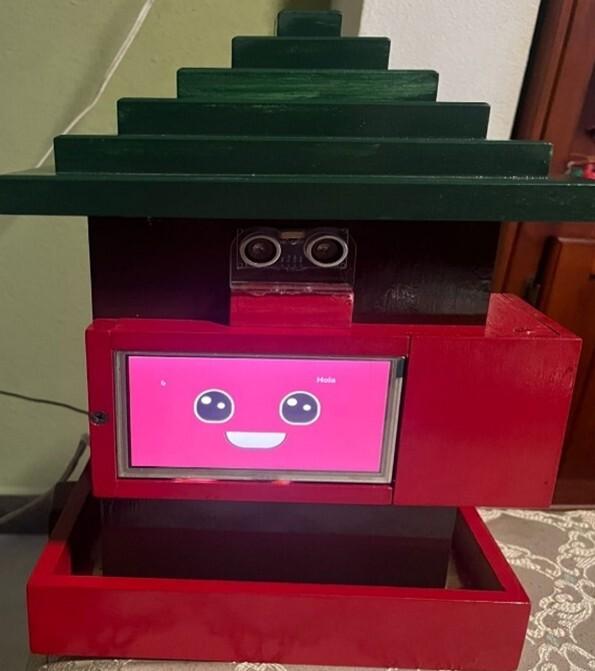
Figure 1 shows the interactive system used during laboratory and application space testing, showing the layout of the central unit, display, and integrated sensors.
Figure 1.
Interactive prototype used for the educational model application
Source: Created by the authors
Integration and implementation of the IoT-supported educational intervention model
The integration of the educational intervention model was developed based on a technological structure designed to support learning experiences based on direct interaction, observation, and active participation. The system architecture was conceived as a support that allows the pedagogical approach to be realized, where technology plays a mediating role between educational content and users. This organization sought to ensure operational stability, consistency between components, and continuity in the educational experience during all phases of implementation.
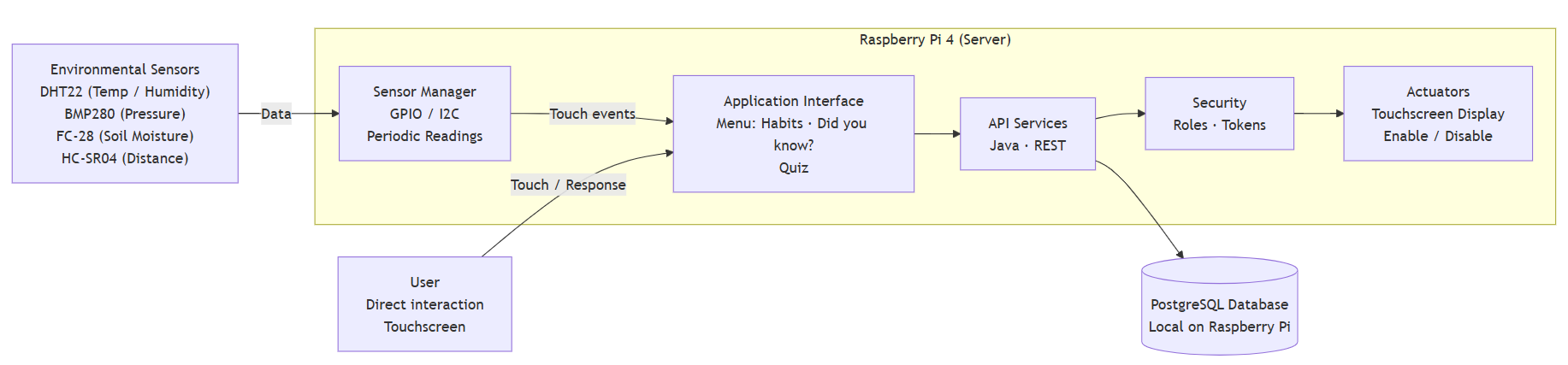
Before implementation, a modular architecture was defined to regulate the flow of information and interaction actions (see Figure 2). This architecture is organized into three clearly differentiated layers, each with specific functions within the educational model. This separation facilitates understanding of the system, management of components, and adaptation of the model to other educational environments with similar conditions.
The perception layer integrates environmental and proximity sensors (DHT22, BMP280, FC-28, and HC-SR04), which are responsible for capturing physical data from the environment and detecting the presence of users. These elements allow interaction to begin and generate immediate responses that introduce the user to the proposed educational activities. The selection of sensors responded to the need to work with variables that are understandable and close to environmental learning, favoring the relationship between observed information and educational content.
The processing layer, hosted on the Raspberry Pi 4, is responsible for interpreting the readings captured by the sensors through GPIO and I²C interfaces. API services developed in Java under a REST scheme were implemented in this layer, which manage the system logic, access control through roles and tokens, and the storage of events in a local PostgreSQL database. This organization allows for a continuous and orderly flow of data, ensuring that the information presented to users is consistent with the actions performed during the interaction.
The application layer corresponds to the touch interface visible to the user, structured into three educational sections: Habits, Did you know? and Select the correct answer. These sections feature short, playful activities that combine reading, multiple-choice questions, and visual feedback. This layer is the point of contact between the educational model and the participants, facilitating learning through direct experience.
Figure 2.
System architecture with three functional layers
Source: Created by the authors
Initial system performance tests
Once the architecture was defined, initial laboratory tests were conducted to verify the performance of the sensors, the response of the interface, and the correct persistence of data. These tests allowed us to observe the behavior of the system under controlled conditions, identify possible technical adjustments, and ensure that the educational experience would run smoothly.
The activities included measuring distances using the HC-SR04 sensor to activate visual responses, recording temperature and humidity with the DHT22, reading atmospheric pressure with the BMP280, and verifying the storage of events in the local database. In addition, simulated interactions with test users were conducted to observe the fluidity of the touch interface and the synchronization between sensor readings and visual feedback.
Table 3 presents a summary of the sensors and actuators used during this phase, along with their educational function within the model.
Table 3.
Sensors and actuators used in the prototype
Device | Main function | Contribution within the educational model |
HC-SR04 | Distance measurement | Activation of interaction upon detecting presence |
DHT22 | Temperature and humidity recording | Association with content on the environment and environmental conditions |
BMP280 | Barometric pressure measurement | Relationship with climate variations |
FC-28 | Soil moisture measurement | Link to natural resource conservation |
Pantalla LCD táctil | User interface | Presentation of activities and feedback |
Source: Created by the authors
Operational implementation of the interactive system
The implementation of the system was carried out as an organized sequence of technical and educational activities. First, the system modules were programmed in Java within Apache NetBeans, defining specific controllers for each sensor and the endpoints responsible for recording and querying events stored in local PostgreSQL. This structure allowed for orderly control of system actions and a consistent response to user interactions.
Subsequently, the touch interface was set up with three interaction paths: Environmental Habits, Did You Know...? and Select the Correct Answer. Each path invokes sensor reading routines and returns immediate visual feedback, reinforcing the link between user action and system response. To facilitate monitoring and technical support during field testing, remote access was enabled through RealVNC, allowing the system's operation to be observed without directly interfering with the user experience.
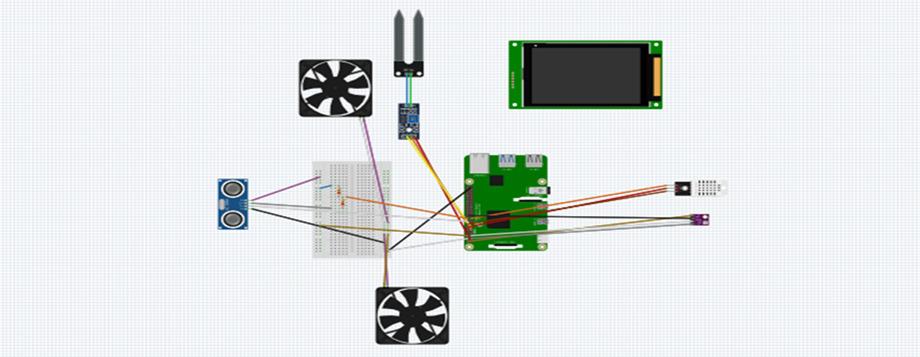
Communication between components was verified by querying the local services exposed by the application, using Postman as a testing tool. Figure 3 illustrates the physical layout of the system and the logical wiring between sensors, processing unit, and display.
Figure 3.
Connection diagram representing the physical architecture of the system.
Source: Created by the authors
Pre-field application performance testing
Before transferring the system to the application environment, a series of tests was performed to evaluate reading latency, data logging stability, and touch interface response. These tests confirmed that the system maintained consistent performance during extended sessions of use.
At this stage, the distance was measured with the HC-SR04 to activate visual responses, temperature and humidity were recorded with the DHT22, atmospheric pressure was obtained using the BMP280, and the persistence of information in the database was validated. Table 4 summarizes the results observed during this phase.
Table 4.
Preliminary performance results
Component | Test applied | Main observation |
HC-SR04 | Presence detection at 1 m | Immediate activation of visual response |
DHT22 | Temperature and humidity recording | Stable readings within the expected range |
BMP280 | Atmospheric pressure measurement | Consistent values in controlled tests |
LCD screen | Touch interaction | Quick response, but with visibility limitations at certain angles |
Database | Record storage | Correct data flow in PostgreSQL |
Source: Created by the authors
Technical and interaction adjustments
Based on the results obtained in the laboratory, adjustments were made to improve the user experience and continuous operation of the system. Among the modifications applied were an increase in font size and interface contrast to improve readability at different angles, the incorporation of an audio module to reinforce sensory feedback, and optimization of the sensor reading code to reduce delays.
Likewise, the physical support of the screen was reinforced in order to facilitate the transfer of the system and its prolonged installation in open or closed spaces. These adjustments contributed to consolidating a more stable and accessible educational experience for users.
Validation of the model with users
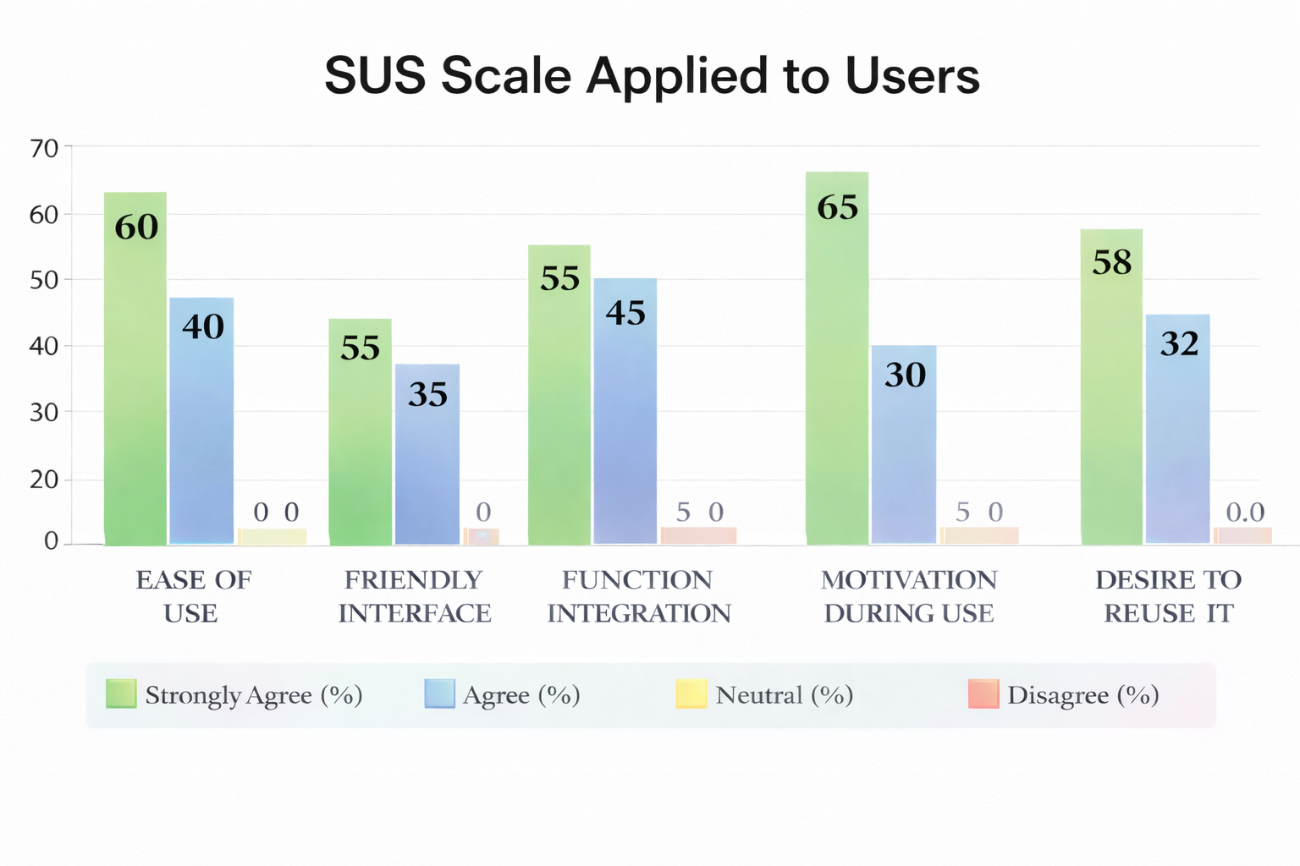
The model was validated at Paseo Shopping Quevedo, with the participation of thirty-two people and an average interaction time of five minutes per participant. After the experience, the System Usability Scale (SUS) was applied to gather perceptions about ease of use, clarity of the interface, and overall experience. The average score obtained was 75.3, which exceeds the threshold established for this study. To facilitate interpretation, the distribution of responses by item is presented in bar graph form in Figure 4.
Figure 4.
Results of the SUS scale applied to users
Source: Created by the authors
Contributions from specialists and pedagogical validation
Technical and pedagogical validation was complemented by interviews with three environmental professionals, identified by codes E1, E2, and E3. These interviews allowed us to gather opinions on educational content, thematic expansion, and possible digital support for the model. The identities of the interviewees were kept anonymous. Table 5 summarizes the opinions and proposals gathered.
Table 5.
Main contributions from environmental experts
Code | Main opinion | Recommendation |
E1 | The device encourages environmental education through direct interaction | Add topics on climate change and biodiversity |
E2 | The intuitive design makes it suitable for school audiences | Include a supporting mobile app |
E3 | Gamification strengthens user motivation | Use symbolic rewards to reinforce habits |
Source: Created by the authors
Results of experimental field tests
Continuous operation tests were conducted in the same application space. The system operated for four hours without interruption, maintaining touch response times of less than one second and favorable visual acceptance, especially among young users. Several people spontaneously suggested enlarging the screen size and enhancing the sound effects for activities in open spaces. Table 6 presents a summary of these findings.
Table 6.
Experimental field results
Variable observed | Result |
Touch response time | Less than 1 second |
Operational stability | Continuous operation for 4 hours without interruption |
Visual acceptance | High, especially among young users |
Spontaneous recommendations | Enlarge screen and add sound feedback |
Source: Created by the authors
DISCUSSION
The analysis of the results obtained allows us to examine the IoT-based educational intervention model from a pedagogical and technological perspective, considering its performance in a real interaction environment. The average score achieved on the System Usability Scale (SUS), with a value of 75.3, indicates favorable user experience, reflecting that the educational proposal was perceived as clear, accessible, and easy to use by the participants. This result is consistent with the model's objective, which prioritizes direct interaction and spontaneous participation as ways to strengthen environmental education.
The positive assessment obtained can be interpreted in light of previous studies that have reported good levels of acceptance in educational proposals that combine IoT technologies with game dynamics[47]. In those studies, sensor-mediated interaction and the visual presentation of information facilitate user attention and engagement. In the case of the present study, the experience was transferred to a physical space in everyday use, which allowed the educational proposal to be naturally integrated into people's routines, extending its reach beyond exclusively virtual environments.
The implementation of the model in an open space showed that the physical presence of the interactive system encourages curiosity and voluntary engagement on the part of users. This behavior coincides with approaches to IoT applied to public spaces, where the installation of interactive devices contributes to activating the place and generating shared educational experiences[48],[49]. Tangible interaction, supported by a touch screen and proximity sensors, allowed the educational proposal to be perceived as an accessible and familiar activity.
The qualitative observations collected during the application provided complementary information to the quantitative results. Suggestions related to screen size and the incorporation of audio feedback are consistent with design recommendations for interactive systems in open spaces, where visibility and multisensory stimulation facilitate content communication[50],[51]. These observations reinforce the idea that the model can be adjusted and adapted to different scenarios while maintaining its pedagogical structure.
Another aspect discussed by specialists and users was the incorporation of symbolic incentives or rewards associated with the proposed activities. This suggestion is in line with experiences of gamification applied to environmental education supported by IoT, in which the introduction of additional stimuli encourages users to remain engaged in the activity and reinforces behaviors related to caring for the environment[52],[53]. In this sense, the model presents conditions for integrating these elements without altering its main architecture.
Table 7 summarizes the main points discussed based on the results obtained and their relationship with contributions from specialized literature.
Table 7.
Summary of findings and their relationship with previous studies
Aspect analyzed | Observed result | Correspondence with the literature |
System usability | Favorable SUS score | |
Interaction in physical space | High spontaneous participation | |
Interface design | Clear reading with necessary adjustments | |
Playful incentives | Interest in rewards |
Source: Created by the authors
CONCLUSIONS
The study allowed us to consolidate an educational intervention model supported by IoT technologies, aimed at strengthening environmental education through direct interaction experiences. The results obtained show that an educational proposal based on active participation, visual feedback, and the integration of sensors can generate an accessible and attractive learning experience for diverse audiences.
The usability evaluation carried out with thirty-two participants showed a favorable perception of the system, reflected in an average score of 75.3 on the SUS scale. This value supports the viability of the model as an educational resource for public and community spaces, where spontaneous interaction is a key factor for learning.
From a technical standpoint, the integration of a Raspberry Pi 4 Model B, environmental sensors, and a touchscreen made it possible to build a stable, energy-efficient solution with potential for adaptation. These elements facilitate the implementation of the proposal in other educational environments with similar characteristics, requiring only adjustments to aspects such as physical space, interaction time, or number of participants.
The analysis of qualitative observations identified opportunities for adjustment aimed at improving the user experience, such as increasing the visibility of the screen in brightly lit environments, incorporating audio feedback, and integrating playful incentives. These lines of action open up possibilities for expanding the scope of the model and enriching its application in future educational interventions.
In short, the study provides a structured educational proposal that combines IoT technology and playful interaction as a means of strengthening environmental education. The developed model offers a solid basis for its application in various educational spaces, where technology acts as a mediator of learning and not as an end in itself.
ACKNOWLEDGEMENTS
The authors express their sincere gratitude to Orlando Erazo, MSc., PhD, for his valuable contributions to the conception of the work and the exchange of ideas that helped strengthen the conceptual approach of the study. His guidance and academic comments were extremely useful for the development and consolidation of the proposal presented.
REFERENCES
Ahmad, Latief, y Firasath Nabi. "IoT (Internet of Things) Based Agricultural Systems". En Agriculture 5.0: Artificial Intelligence, IoT, and Machine Learning, editado por CRC Press, 69-121. London: CRC Press, 2021. https://doi.org/10.1201/9781003125433-4.
Albreem, Mahmoud A., Abdul Manan Sheikh, Mohammed H. Alsharif, Muzammil Jusoh, y Mohd Najib Mohd Yasin. "Green Internet of Things (GIoT): Applications, Practices, Awareness, and Challenges". IEEE Access 9 (2021): 2-9. https://doi.org/10.1109/ACCESS.2021.3061697.
Alcivar, Nayeth Solorzano, Dennys Paillacho Chiluiza, Michael Arce Sierra, y Josue Tomala Pozo. "Metrics for a Human-Robot-Game Platform to Evaluate Attention and Emotion in Children with ASD". En 2022 International Conference on Electrical, Computer, Communications and Mechatronics Engineering (ICECCME): IEEE, 2022. https://doi.org/10.1109/ICECCME55909.2022.9988747.
Ávila-Camacho, Francisco Jacob, y Leonardo Miguel Moreno-Villalba. "Internet de las Cosas (IoT) Retos para las Empresas en la Era de la Industria 4.0". Pädi Boletín Científico de Ciencias Básicas e Ingenierías del ICBI 10, no. 20 (2023): 10-16. https://doi.org/10.29057/ICBI.V10I20.9516.
Brito, Geovanny. "Propuesta para el Desarrollo de Software Educativo Lúdico Basada en el Diseño Universal para el Aprendizaje". Tesis de [pregrado/maestría/doctorado], Universidad Técnica Estatal de Quevedo, 2022. https://repositorio.uteq.edu.ec/items/8e8592ce-e33a-474a-8f31-01c3ccf964db.
Castellanos, Pedro Mauricio Acosta, Araceli Queiruga-Dios, Ascensión Hernández Encinas, y Libia Cristina Acosta. "Environmental Education in Environmental Engineering: Analysis of the Situation in Colombia and Latin America". Sustainability 12, no. 18 (2020): 1-14. https://doi.org/10.3390/SU12187239.
Chapman, David. "Environmentally Sustainable Urban Development and Internet of Things Connected Sensors in Cognitive Smart Cities". Geopolitics, History, and International Relations 13, no. 2 (2021): 51-64. https://www.ceeol.com/search/article-detail?id=992891.
Cruz, Jhon, y George Visa. "Educación Ambiental en Instituciones Educativas de Educación Básica en Latinoamérica: Revisión Sistemática". Ciencia Latina Revista Científica Multidisciplinar 6, no. 3 (2022): 723-39. https://doi.org/10.37811/CL_RCM.V6I3.2255.
Damayanthy Salinas Anaya, Yuvia, [verificar segundo autor: "Matamoros Tamaulipas" parece corresponder a una ubicación geográfica, no a un autor], Daniel Gonzalo Galván Rodríguez, y Jorge Orrante Sakanassi. "El Impacto del Internet de Todas las Cosas (IoT) en la Vida Cotidiana". Ciencia Latina Revista Científica Multidisciplinar 6, no. 2 (2022): 1369-78. https://doi.org/10.37811/CL_RCM.V6I2.1959.
Erazo Moreta, Orlando Ramiro. "Propuesta de Diseño Universal para el Aprendizaje Orientado al Proceso Educativo de Estudiantes Universitarios". Tesis de maestría, Pontificia Universidad Católica del Ecuador, 2022. https://repositorio.puce.edu.ec/handle/123456789/20089.
Erazo, Orlando, y Jorge Molina. "DUAcentes: Aplicación Móvil para Apoyar la Utilización del Diseño Universal para el Aprendizaje". Código Científico Revista de Investigación 4, no. E1 (2023): 147-62. https://doi.org/10.55813/GAEA/CCRI/V4/NE1/90.
Feng, Mingfen, Xiaomei Zhang, y Peichu Liu. "Development Potential of the Internet of Things-Based Forest Recreation under the Background of Informatization". Mobile Information Systems 2022, no. 1 (2022): 6309178. https://doi.org/10.1155/2022/6309178.
Gao, Chao, Feng Wang, Xiaobing Hu, y James Martinez. "Research on Sustainable Design of Smart Cities Based on the Internet of Things and Ecosystems". Sustainability 15, no. 8 (2023): 6546. https://doi.org/10.3390/SU15086546.
Hany, Esraa, y Noha Mohamed Khaled. "Enhancing Performance of Public Spaces through Internet of Things (IoT) Technologies: Strategies and Optimization". Engineering Research Journal (Shoubra) 53, no. 4 (2024): 271-78. https://doi.org/10.21608/ERJSH.2024.318461.1349.
Martínez Castillo, Róger. "Algunos Aspectos de la Huella Ecológica". InterSedes: Revista de las Sedes Regionales 8, no. 14 (2007): 11-25. https://www.redalyc.org/articulo.oa?id=66615071002.
Mulumeoderhwa Mufungizi, Etienne. "El Mundo de la Conectividad: Un Paso hacia el Crecimiento del Internet de las Cosas en México". Revista ComHumanitas 13, no. 1 (2022): 72-91. https://doi.org/10.31207/rch.v13i1.336.
Muniswamy, Arunkumar, y R. Rathi. "A Detailed Review on Enhancing the Security in Internet of Things-Based Smart City Environment Using Machine Learning Algorithms". IEEE Access 12 (2024): 120389-413. https://doi.org/10.1109/ACCESS.2024.3450180.
Mylonas, Georgios, Dimitrios Amaxilatis, Lidia Pocero, Iraklis Markelis, Joerg Hofstaetter, y Pavlos Koulouris. "Using an Educational IoT Lab Kit and Gamification for Energy Awareness in European Schools". Editado por Association for Computing Machinery, 30-36. New York: ACM, 2018. https://doi.org/10.1145/3213818.3213823.
Naciones Unidas. "Biodiversidad: Nuestra Defensa Natural Más Fuerte contra el Cambio Climático". Naciones Unidas, 2021. https://www.un.org/es/climatechange/science/climate-issues/biodiversity.
Neves, Flávio, Rafael Souza, Juliana Sousa, Michel Bonfim, y Vinicius Garcia. "Data Privacy in the Internet of Things Based on Anonymization: A Review". Journal of Computer Security 31, no. 3 (2023): 261-91. https://doi.org/10.3233/JCS-210089.
Ochante-Ramos, [verificar nombre de pila: "Fundación" no parece nombre propio], Miriam Riveros-Davalos, Never Mamani-Mercado, y Rosa Ochante-Ramos. "Prácticas Sostenibles y Conciencia Ambiental: Estrategias para la Conservación del Medio Ambiente". Revista Arbitrada Interdisciplinaria Koinonía 8, no. 1 (2023): 287-305. https://doi.org/10.35381/R.K.V8I1.2791.
Olatomiwa, Lanre, James Garba Ambafi, Umar Suleiman Dauda, Omowunmi Mary Longe, Kufre Esenowo Jack, Idowu Adetona Ayoade, Isah Ndakara Abubakar, y Alabi Kamilu Sanusi. "A Review of Internet of Things-Based Visualisation Platforms for Tracking Household Carbon Footprints". Sustainability 15, no. 20 (2023): [páginas]. https://doi.org/10.3390/SU152015016.
Rahman, Abdul, Misrawati Misrawati, A. Bida Purnamasari, y Badaruddin Anwar. "Integration of Education and Internet of Things as an Environmental Conservation Effort". Conference or Workshop Item. Universitas Negeri Makassar, 2023. https://eprints.unm.ac.id/31731/.
Rajichellam, J., T. Dhanalakshmir, y V. Rohini. "Man-Made Environmental Pollution with an Eye to Future Reduction Using IoT-Based Models". En Intelligent Technologies and Robotics, editado por Springer, Cham, 127-36. Lecture Notes on Data Engineering and Communications Technologies 227: Springer, 2024. https://doi.org/10.1007/978-3-031-74374-0_7.
Rock, Leong Yee, Farzana Parveen Tajudeen, y Yeong Wai Chung. "Usage and Impact of the Internet-of-Things-Based Smart Home Technology: A Quality-of-Life Perspective". Universal Access in the Information Society 23, no. 1 (2024): 345-64. https://doi.org/10.1007/s10209-022-00937-0.
Rodosthenous, Christos, Efstathios Mavrotheris, Wolfgang Greller, y Bernardo Tabuenca. "Creating Environmental Awareness in Education through IoT and Gamification". En [Título completo del volumen], editado por [editor/es], 657-68. Lecture Notes in Networks and Systems 634: Springer, 2023. https://doi.org/10.1007/978-3-031-26190-9_69.
Saeedbakhsh, Saeed, Maryam Mohammadi, Sarina Younesi, y Mohammad Sattari. "Using Internet of Things for Child Care: A Systematic Review". International Journal of Preventive Medicine 16, no. 16 (2025): 3. https://doi.org/10.4103/IJPVM.IJPVM_191_23.
Salam, Abdul. "Internet of Things for Sustainable Community Development: Introduction and Overview". En Engineering, editado por Springer, Cham, 1-31. [Ciudad]: Springer, 2024. https://doi.org/10.1007/978-3-031-62162-8_1.
Shihao, Li, Dahlila Putri Dahnil, y Saidah Saad. "A Survey of Smart Campus Resource Information Management in Internet of Things". IEEE Access 13 (2025): 66622-45. https://doi.org/10.1109/ACCESS.2025.3558900.
Ticlla, María Elena, Jesús Emilio Caballero, y María Cristina Cárdenas. "Conciencia Ambiental desde la Educación: Estado del Arte". Revista Iberoamericana de Educación E1, no. Epecial (2021): 1-28. https://doi.org/10.31876/IE.VI.117.
Zeng, Fan, Chuan Pang, y Huajun Tang. "Sensors on Internet of Things Systems for the Sustainable Development of Smart Cities: A Systematic Literature Review". Sensors 24, no. 7 (2024):. https://doi.org/10.3390/S24072074.
Zhang, Yan. "Research on Traditional Rural Ecological Environment Protection and Planning Design Based on Mathematical Models and Internet of Things Technology". Preprint, Research Square, 21 de diciembre de 2023. https://doi.org/10.21203/RS.3.RS-3571371/V1.
Las opiniones, análisis y conclusiones del autor son de su responsabilidad y no necesariamente reflejan el pensamiento de la Revista Inclusiones. | |
[1] Naciones Unidas, “Biodiversidad: Nuestra Defensa Natural Más Fuerte Contra El Cambio Climático | Naciones Unidas,” 2021, https://www.un.org/es/climatechange/science/climate-issues/biodiversity.
[2] Jhon Cruz and George Visa, “Educación Ambiental En Instituciones Educativas de Educación Básica En Latinoamérica: Revisión Sistemática,” Ciencia Latina Revista Científica Multidisciplinar 6, no. 3 (May 29, 2022): 723–39, https://doi.org/10.37811/CL_RCM.V6I3.2255.
[3] María Elena Ticlla, Jesús Emilio Caballero, and María Cristina Cárdenas, “Conciencia Ambiental Desde La Educación: Estado Del Arte,” Revista Iberoamericana de Educación, December 2, 2021, https://doi.org/10.31876/IE.VI.117.
[4] Geovanny Brito, “Propuesta Para El Desarrollo de Software Educativo Lúdico Basada En El Diseño Universal Para El Aprendizaje” (Quevedo: UTEQ, 2022), https://repositorio.uteq.edu.ec/items/8e8592ce-e33a-474a-8f31-01c3ccf964db.
[5] Orlando Erazo and Jorge Molina, “DUAcentes: Aplicación Móvil Para Apoyar La Utilización Del Diseño Universal Para El Aprendizaje,” Código Científico Revista de Investigación 4, no. E1 (May 19, 2023): 147–62, https://doi.org/10.55813/GAEA/CCRI/V4/NE1/90.
[6] Christos Rodosthenous et al., “Creating Environmental Awareness in Education Through IoT and Gamification,” Lecture Notes in Networks and Systems 634 (2023): 657–68, https://doi.org/10.1007/978-3-031-26190-9_69.
[7] David Chapman, “Environmentally Sustainable Urban Development and Internet of Things Connected Sensors in Cognitive Smart Cities,” Geopolitics, History, and International Relations 13, no. 2 (2021): 51–64, https://www.ceeol.com/search/article-detail?id=992891.
[8] Rodosthenous et al., “Creating Environmental Awareness in Education Through IoT and Gamification.”
[9] Latief Ahmad and Firasath Nabi, “IoT (Internet of Things) Based Agricultural Systems,” Agriculture 5.0: Artificial Intelligence, IoT, and Machine Learning, March 24, 2021, 69–121, https://doi.org/10.1201/9781003125433-4.
[10] Abdul Salam, “Internet of Things for Sustainable Community Development: Introduction and Overview,” Journal of Animal Science and Biotechnology, 2024, 1–31, https://doi.org/10.1007/978-3-031-62162-8_1.
[11] Mahmoud A. Albreem et al., “Green Internet of Things (GIoT): Applications, Practices, Awareness, and Challenges,” IEEE Access 9 (2021): 2–9, https://doi.org/10.1109/ACCESS.2021.3061697.
[12] Georgios Mylonas et al., “Using an Educational IoT Lab Kit and Gamification for Energy Awareness in European Schools,” ACM International Conference Proceeding Series Part F137702 (June 18, 2018): 30–36, https://doi.org/10.1145/3213818.3213823.
[13] Esraa Hany and noha Mohamed khaled, “Enhancing Performance of Public Spaces through Internet of Things (IoT) Technologies: Strategies and Optimization,” Engineering Research Journal (Shoubra) 53, no. 4 (October 1, 2024): 271–78, https://doi.org/10.21608/ERJSH.2024.318461.1349.
[14] Pedro Mauricio Acosta Castellanos et al., “Environmental Education in Environmental Engineering: Analysis of the Situation in Colombia and Latin America,” Sustainability (Switzerland) 12, no. 18 (September 2, 2020): 1–14, https://doi.org/10.3390/SU12187239.
[15] Fan Zeng, Chuan Pang, and Huajun Tang, “Sensors on Internet of Things Systems for the Sustainable Development of Smart Cities: A Systematic Literature Review,” Journal Sensors 24, no. 7 (March 24, 2024): 20–74, https://doi.org/10.3390/S24072074.
[16] Abdul Rahman et al., “Integration of Education and Internet of Things as an Environmental Conservation Effort,” Journal Eprints, 2023, https://eprints.unm.ac.id/31731/.
[17] Orlando Ramiro Erazo Moreta, “Propuesta de Diseño Universal Para El Aprendizaje Orientado Al Proceso Educativo de Estudiantes Universitarios” (PUCE - Quito, 2022), https://repositorio.puce.edu.ec/handle/123456789/20089.
[18] Fundación Ochante-Ramos et al., “Prácticas Sostenibles y Conciencia Ambiental: Estrategias Para La Conservación Del Medio Ambiente,” Revista Arbitrada Interdisciplinaria Koinonía 8, no. 1 (August 15, 2023): 287–305, https://doi.org/10.35381/R.K.V8I1.2791.
[19] Róger Martínez Castillo, “Algunos Aspectos de La Huella Ecológica,” InterSedes: Revista de Las Sedes Regionales VIII, no. 14 (2007): 11–25, https://www.redalyc.org/articulo.oa?id=66615071002.
[20] Yan Zhang, “Research on Traditional Rural Ecological Environment Protection and Planning Design Based on Mathematical Models and Internet of Things Technology,” Journal Research Square, December 21, 2023, https://doi.org/10.21203/RS.3.RS-3571371/V1.
[21] Mingfen Feng, Xiaomei Zhang, and Peichu Liu, “Development Potential of the Internet of Things-Based Forest Recreation under the Background of Informatization,” Mobile Information Systems 2022, no. 1 (January 1, 2022), https://doi.org/10.1155/2022/6309178.
[22] Salam, “Internet of Things for Sustainable Community Development: Introduction and Overview.”
[23] Chao Gao et al., “Research on Sustainable Design of Smart Cities Based on the Internet of Things and Ecosystems,” Journal Sustainability 15, no. 8 (April 12, 2023): 46–65, https://doi.org/10.3390/SU15086546.
[24] Li Shihao, Dahlila Putri Dahnil, and Saidah Saad, “A Survey of Smart Campus Resource Information Management in Internet of Things,” IEEE Access 13 (2025): 66622–45, https://doi.org/10.1109/ACCESS.2025.3558900.
[25] Nayeth Solorzano Alcivar et al., “Metrics for a Human-Robot-Game Platform to Evaluate Attention and Emotion in Children with ASD,” International Conference on Electrical, Computer, Communications and Mechatronics Engineering, 2022, https://doi.org/10.1109/ICECCME55909.2022.9988747.
[26] Flávio Neves et al., “Data Privacy in the Internet of Things Based on Anonymization: A Review,” Journal of Computer Security 31, no. 3 (2023): 261–91, https://doi.org/10.3233/JCS-210089.
[27] Yuvia Damayanthy Salinas Anaya et al., “El Impacto Del Internet de Todas Las Cosas (IoT) En La Vida Cotidiana,” Ciencia Latina Revista Científica Multidisciplinar 6, no. 2 (March 29, 2022): 1369–78, https://doi.org/10.37811/CL_RCM.V6I2.1959.
[28] Arunkumar Muniswamy and R. Rathi, “A Detailed Review on Enhancing the Security in Internet of Things-Based Smart City Environment Using Machine Learning Algorithms,” IEEE Access 12 (2024): 120389–413, https://doi.org/10.1109/ACCESS.2024.3450180.
[29] Lanre Olatomiwa et al., “A Review of Internet of Things-Based Visualisation Platforms for Tracking Household Carbon Footprints,” Sustainability 15, no. 20 (October 18, 2023), https://doi.org/10.3390/SU152015016.
[30] Saeed Saeedbakhsh et al., “Using Internet of Things for Child Care: A Systematic Review,” International Journal of Preventive Medicine 16 (January 1, 2025), https://doi.org/10.4103/IJPVM.IJPVM_191_23.
[31] J. Rajichellam, T. Dhanalakshmir, and V. Rohini, “Man-Made Environmental Pollution with an Eye to Future Reduction Using IoT-Based Models,” Lecture Notes on Data Engineering and Communications Technologies 227 (2024): 127–36, https://doi.org/10.1007/978-3-031-74374-0_7.
[32] Leong Yee Rock, Farzana Parveen Tajudeen, and Yeong Wai Chung, “Usage and Impact of the Internet-of-Things-Based Smart Home Technology: A Quality-of-Life Perspective,” Universal Access in the Information Society 23, no. 1 (March 1, 2024): 345–64, https://doi.org/10.1007/S10209-022-00937-0/METRICS.
[33] Saeedbakhsh et al., “Using Internet of Things for Child Care: A Systematic Review.”
[34] Francisco Jacob Ávila-Camacho and Leonardo Miguel Moreno-Villalba, “Internet de Las Cosas (IoT) Retos Para Las Empresas En La Era de La Industria 4.0,” Pädi Boletín Científico de Ciencias Básicas e Ingenierías Del ICBI 10, no. 20 (January 5, 2023): 10–16, https://doi.org/10.29057/ICBI.V10I20.9516.
[35] Etienne Mulumeoderhwa Mufungizi, “El Mundo de La Conectividad: Un Paso Hacia El Crecimiento Del Internet de Las Cosas En México,” Revista ComHumanitas 13, no. 1 (2022): 72–91, https://doi.org/10.31207/rch.v13i1.336.
[36] Mylonas et al., “Using an Educational IoT Lab Kit and Gamification for Energy Awareness in European Schools.”
[37] Hany and khaled, “Enhancing Performance of Public Spaces through Internet of Things (IoT) Technologies: Strategies and Optimization.”
[38] Zeng, Pang, and Tang, “Sensors on Internet of Things Systems for the Sustainable Development of Smart Cities: A Systematic Literature Review.”
[39] Feng, Zhang, and Liu, “Development Potential of the Internet of Things-Based Forest Recreation under the Background of Informatization.”
[40] Ahmad and Nabi, “IoT (Internet of Things) Based Agricultural Systems.”
[41] Zeng, Pang, and Tang, “Sensors on Internet of Things Systems for the Sustainable Development of Smart Cities: A Systematic Literature Review.”
[42] Shihao, Dahnil, and Saad, “A Survey of Smart Campus Resource Information Management in Internet of Things.”
[43] Rodosthenous et al., “Creating Environmental Awareness in Education Through IoT and Gamification.”
[44] Mylonas et al., “Using an Educational IoT Lab Kit and Gamification for Energy Awareness in European Schools.”
[45] Hany and khaled, “Enhancing Performance of Public Spaces through Internet of Things (IoT) Technologies: Strategies and Optimization.”
[46] Olatomiwa et al., “A Review of Internet of Things-Based Visualisation Platforms for Tracking Household Carbon Footprints.”
[47] Rodosthenous et al., “Creating Environmental Awareness in Education Through IoT and Gamification.”
[48] Hany and khaled, “Enhancing Performance of Public Spaces through Internet of Things (IoT) Technologies: Strategies and Optimization.”
[49] Salam, “Internet of Things for Sustainable Community Development: Introduction and Overview.”
[50] Salam.
[51] Olatomiwa et al., “A Review of Internet of Things-Based Visualisation Platforms for Tracking Household Carbon Footprints.”
[52] Rodosthenous et al., “Creating Environmental Awareness in Education Through IoT and Gamification.”
[53] Mylonas et al., “Using an Educational IoT Lab Kit and Gamification for Energy Awareness in European Schools.”
[54] Rodosthenous et al., “Creating Environmental Awareness in Education Through IoT and Gamification.”
[55] Mylonas et al., “Using an Educational IoT Lab Kit and Gamification for Energy Awareness in European Schools.”
[56] Salam, “Internet of Things for Sustainable Community Development: Introduction and Overview.”
[57] Hany and khaled, “Enhancing Performance of Public Spaces through Internet of Things (IoT) Technologies: Strategies and Optimization.”
[58] Hany and khaled.
[59] Olatomiwa et al., “A Review of Internet of Things-Based Visualisation Platforms for Tracking Household Carbon Footprints.”
[60] Rodosthenous et al., “Creating Environmental Awareness in Education Through IoT and Gamification.”
[61] Mylonas et al., “Using an Educational IoT Lab Kit and Gamification for Energy Awareness in European Schools.”